
Kintsugi and Yobitsugi: ceramic Repair techniques as the basis of an aesthetic exploration in knifemaking
Back in December, I began releasing knives that are made with tin, silver and bronze included in the composition of the blade. For a bunch of boring reasons, It’s taken a while but I would like to tell the story of how this work came to be.
Many of you will be familiar with the art of Kintsugi and its philosophical concepts but for those who are not, here is a brief synopsis. Historically, Kintsugi (and Gintsugi which is the same but with silver) represent an approach to repairing ceramic items that have broken, such that the repair itself becomes the focal point of the new piece.
When I was a teenager, I saw photos of Kintsugi (I don’t recall where) and possibly because I was already studying metal work, I thought that the ceramic pieces were fused (soldered) back together with molten gold. I was disappointed to learn that the shards are glued together with Urushi lacquer and then gold (or silver) powder is added as a topcoat. This is inline with the notion that a Kitsugi repair not only refuses to hide the damage but deliberately draws attention to, yet as a modern craftsman and a metal-head, I couldn’t help wanting the gold to be the material that made the repair possible.
Anyway, much is said about this aspect of Kintsugi: using extra steps and precious metals to highlight the repair and find beauty in the damage.
I think that there is another interesting aspect that gets less attention. The way that brittle objects fracture, reveals the invisible laws of physics that give order to our universe. We can see in the random-but-not-random patterns something that is usually hidden but is always true and like the branching of a tree or the forking of lightening, it is beautiful.
With these ideas in the back of my mind and some other work with non ferrous metals underway, it was perhaps inevitable that I would eventually try it, but in the end, it was not planned. I had a Honyaki break during heat treatment. I was so disappointed and the impulse to fix it was overwhelming. I was utterly astonished when it worked. I fused my first repair with 100% tin solder, which melts at a low enough temperature that with some basic precautions, it will not disrupt the temper of the blade.
While this first blade represents a true repair in the sense that the blade broke accidentally and was useless unless something was done, it did not visually embody that fractured beauty. It feels somewhat indulgent to break a knife just so you can fix it, but I have been assured that this is often what Kintsugi artists resort to, rather than wait for a nice bowl to accidentally break (but not too badly).
So, being in a mode of exploration, I deliberately fractured several knives and collected the pieces. Below are two versions, one made with tin applied after heat treatment, the other fused with brass before the blade was hardened and tempered.
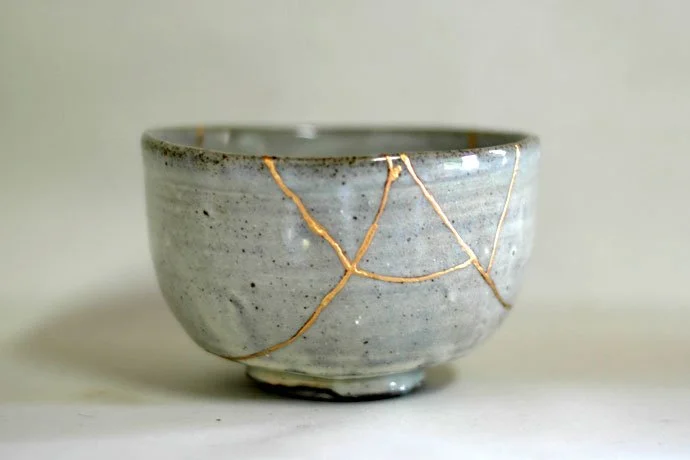
Example of Traditional Kintsugi
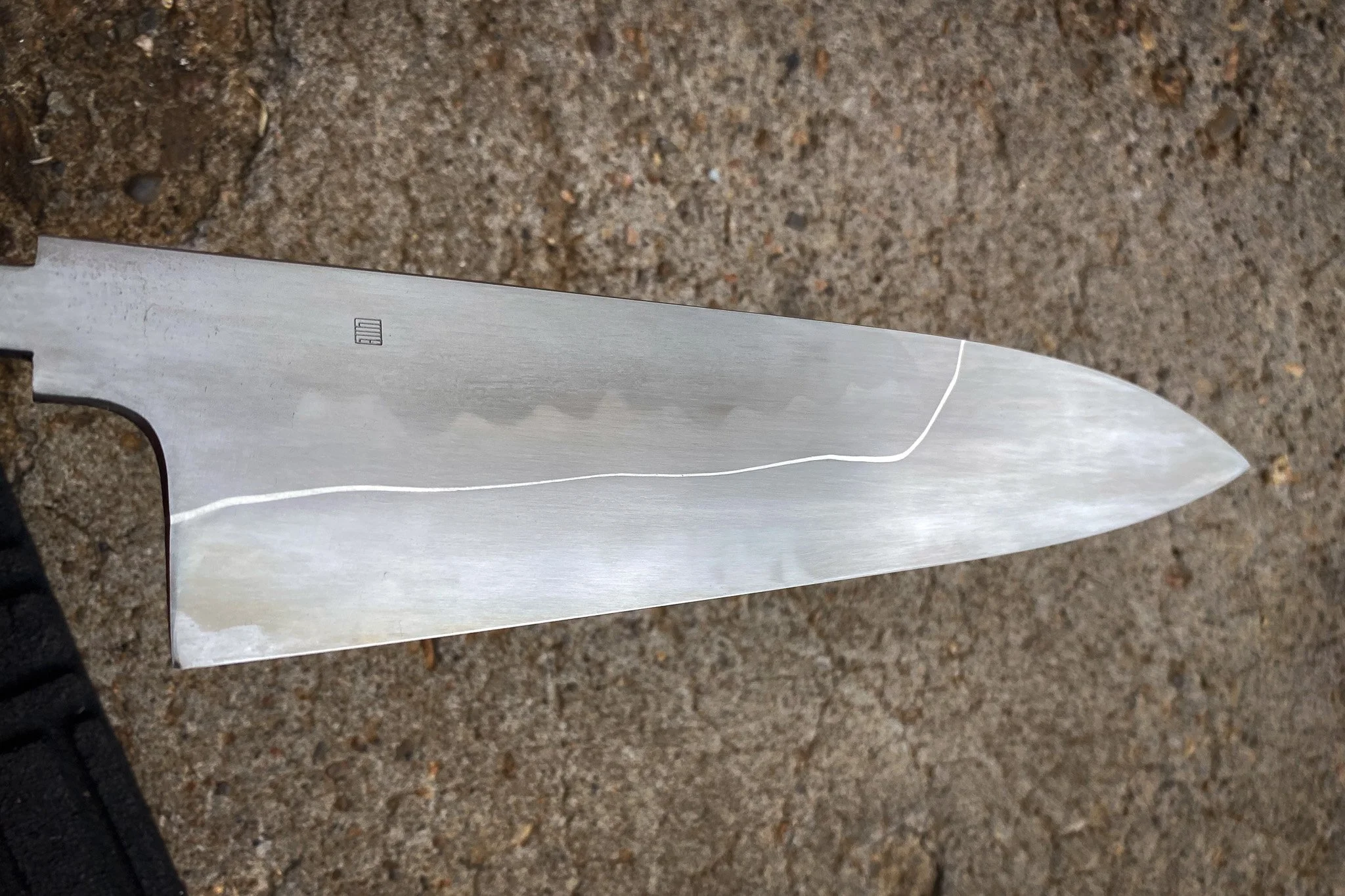
The First Gintsugi Blade
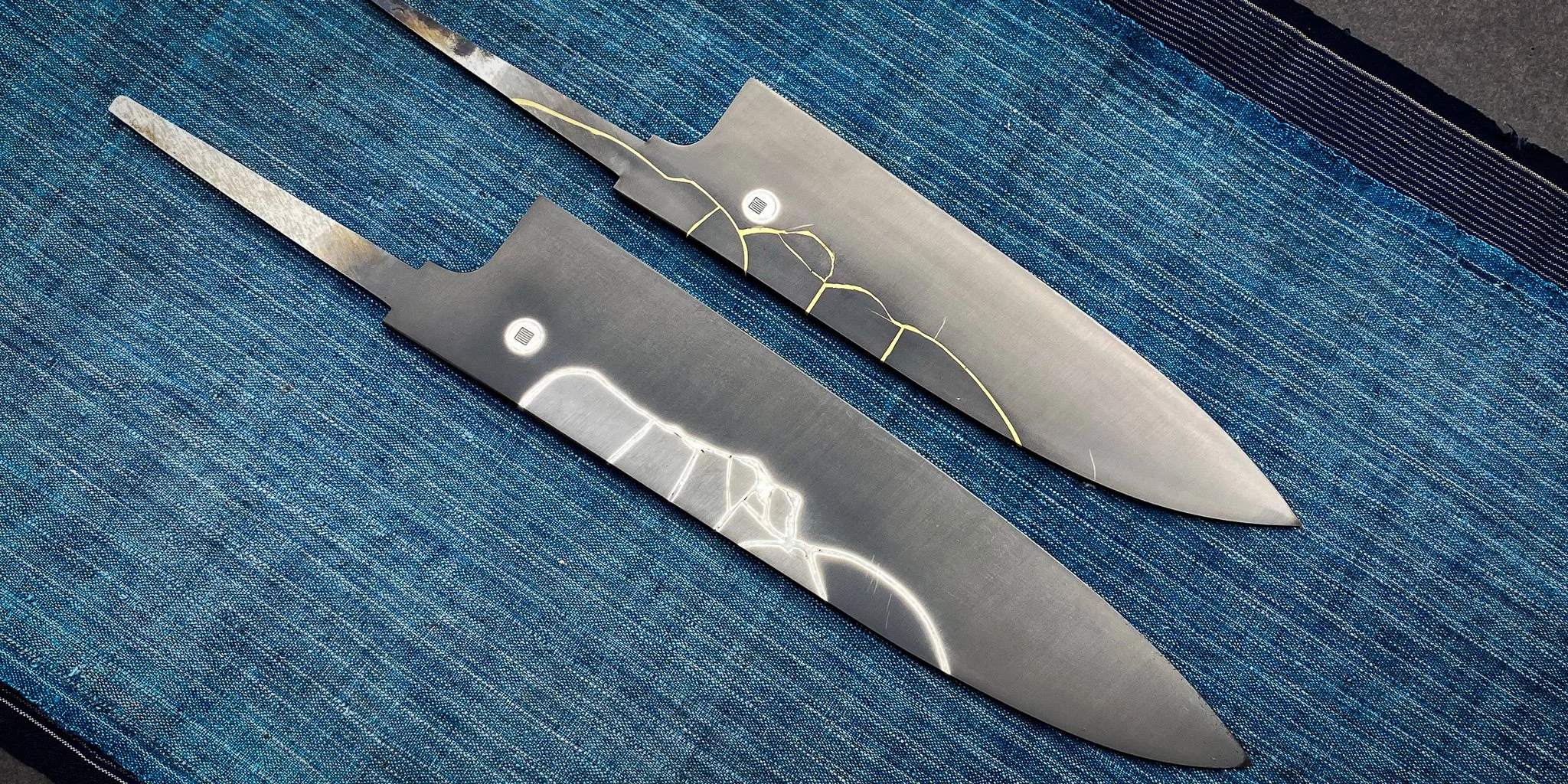
Kintsugi and Gintsugi Blades
This resulted in some interesting pieces but there were real limitations as well. In the end, I really lamented that the repairs were not authentic. I am much more interested in techniques and objects that remain connected to a purpose, even in a slightly impractical way. I could see making a few blades this way but it would not have amounted to a body of work if I hadn’t happened to see an exhibit of Suzuki Goro at a friends gallery and learned about Yobitsugi.
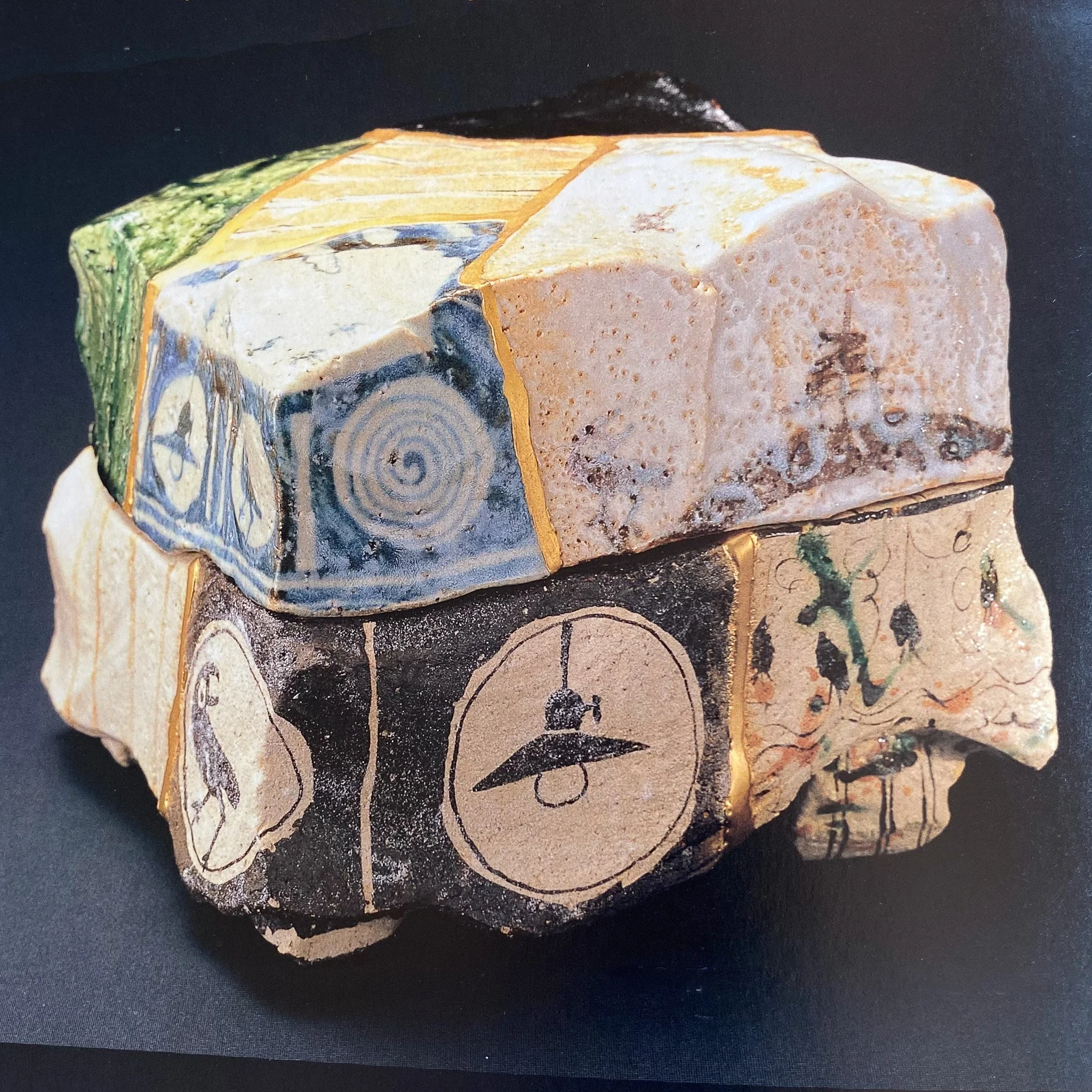
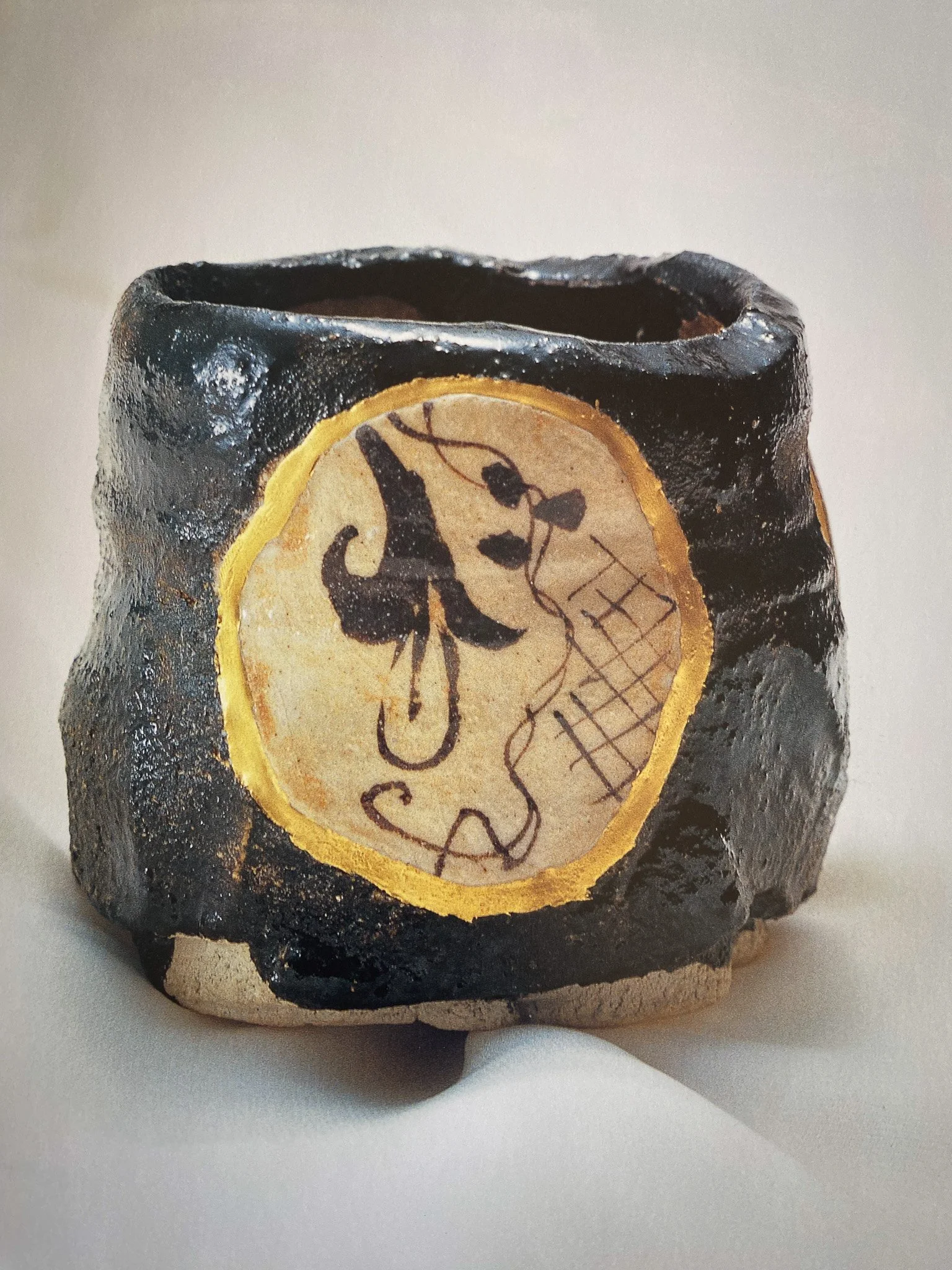
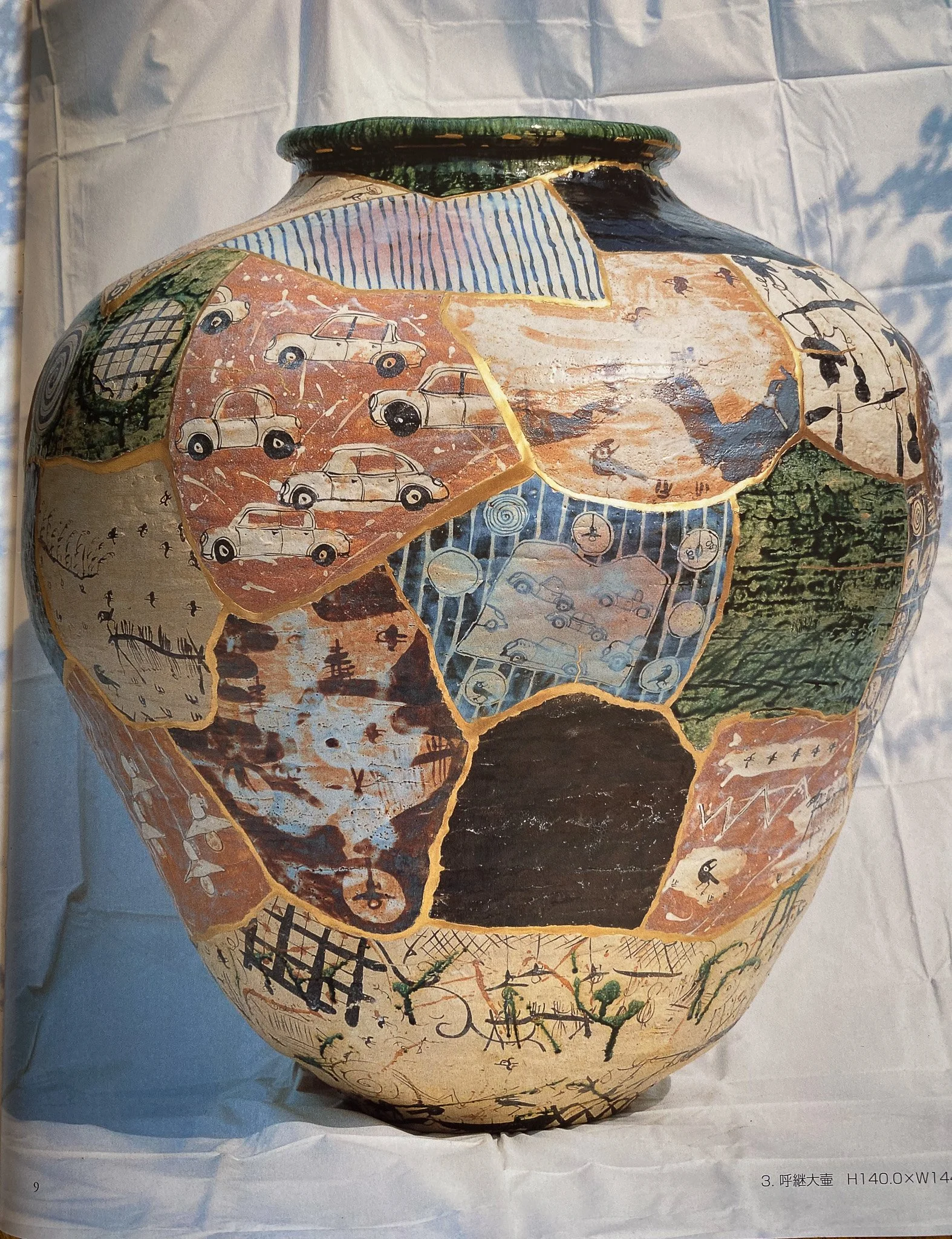
What happens if the ceramic bowl that has broken is missing a piece or a section was so pulverized that its impossible to glue it back? In this case, a shard of a different pot can be used as a patch. This technique is called Yobitsugi. And in keeping with the philosophy of Kintsugi, the choice of material for the “patch” is usually one that creates a splendid, eye-catching contrast rather than attempting to match the original. In his work, Suzuki Goro takes this idea beyond repairs, using ceramics like collage to assemble uncanny creations. I could immediately see this applied to knives. In fact, it helped solve the problem I ran into with my reclaimed cladding project. Unlike forge welding, this approach allows me to reclaim pieces of failed knives and other small scraps without loosing the individual and varied character of those pieces.
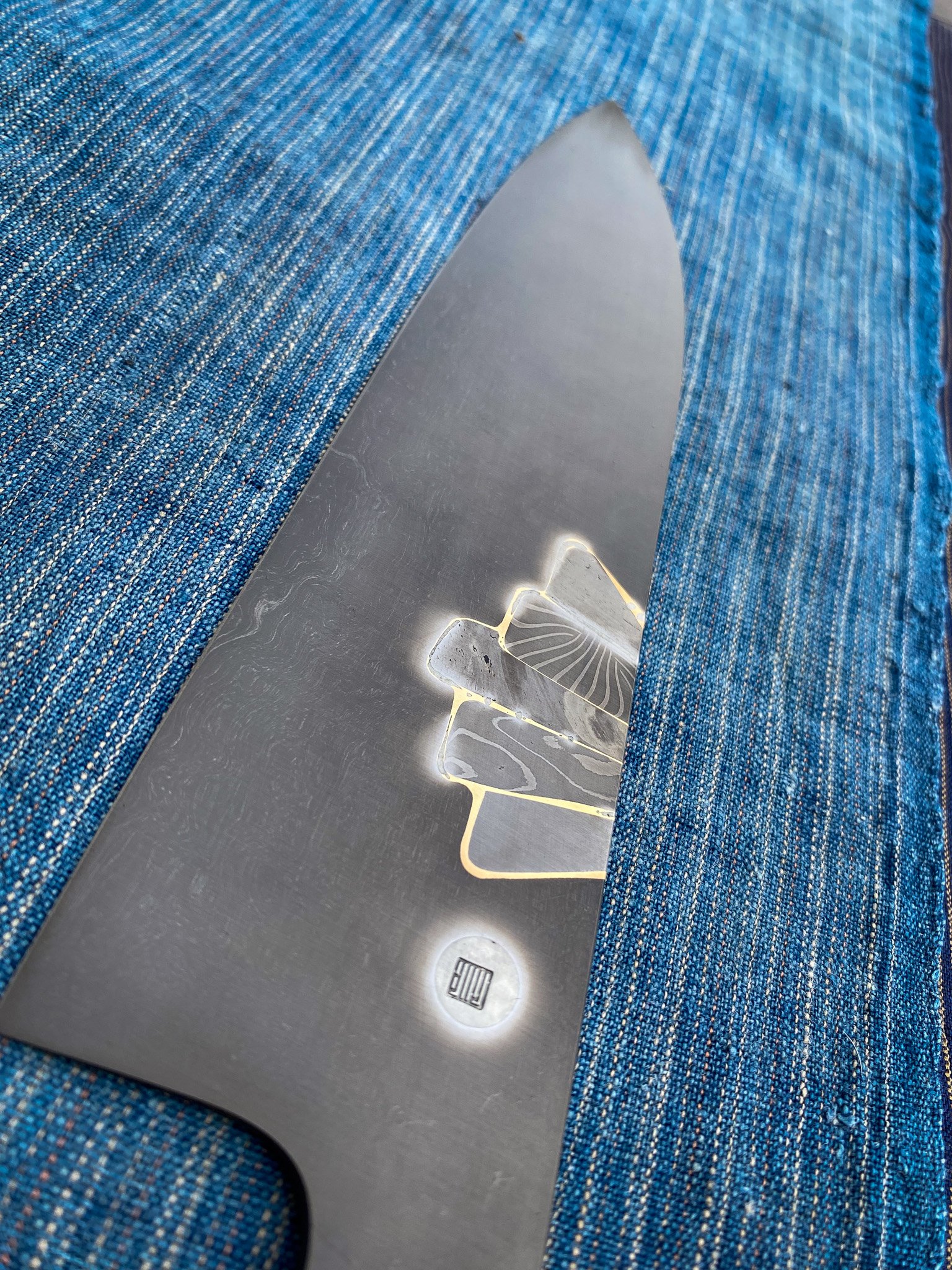
52100 Blade with Yobitsugi from Failed Knives
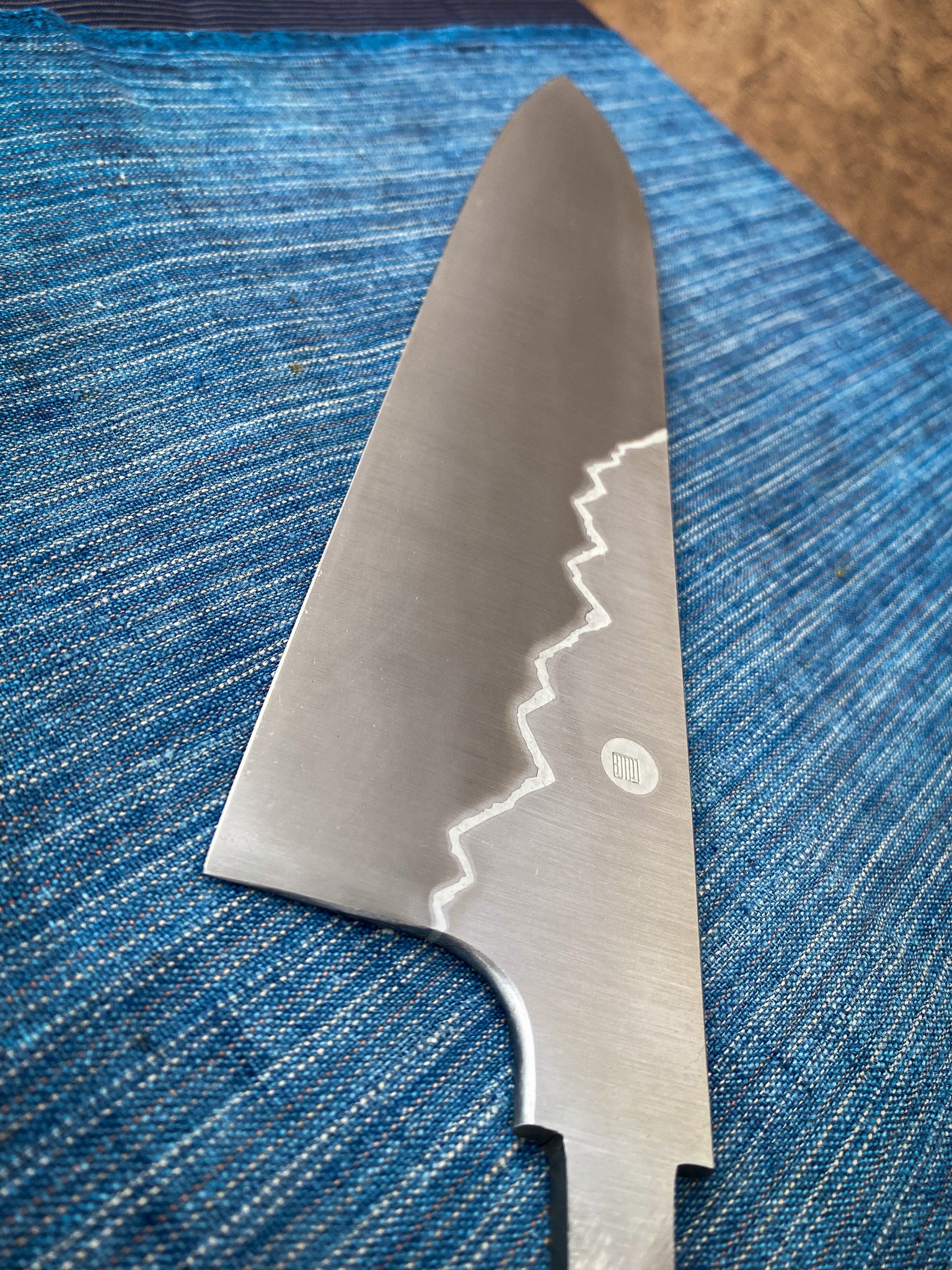
AEB-L Blade with Stainless Steel Tang
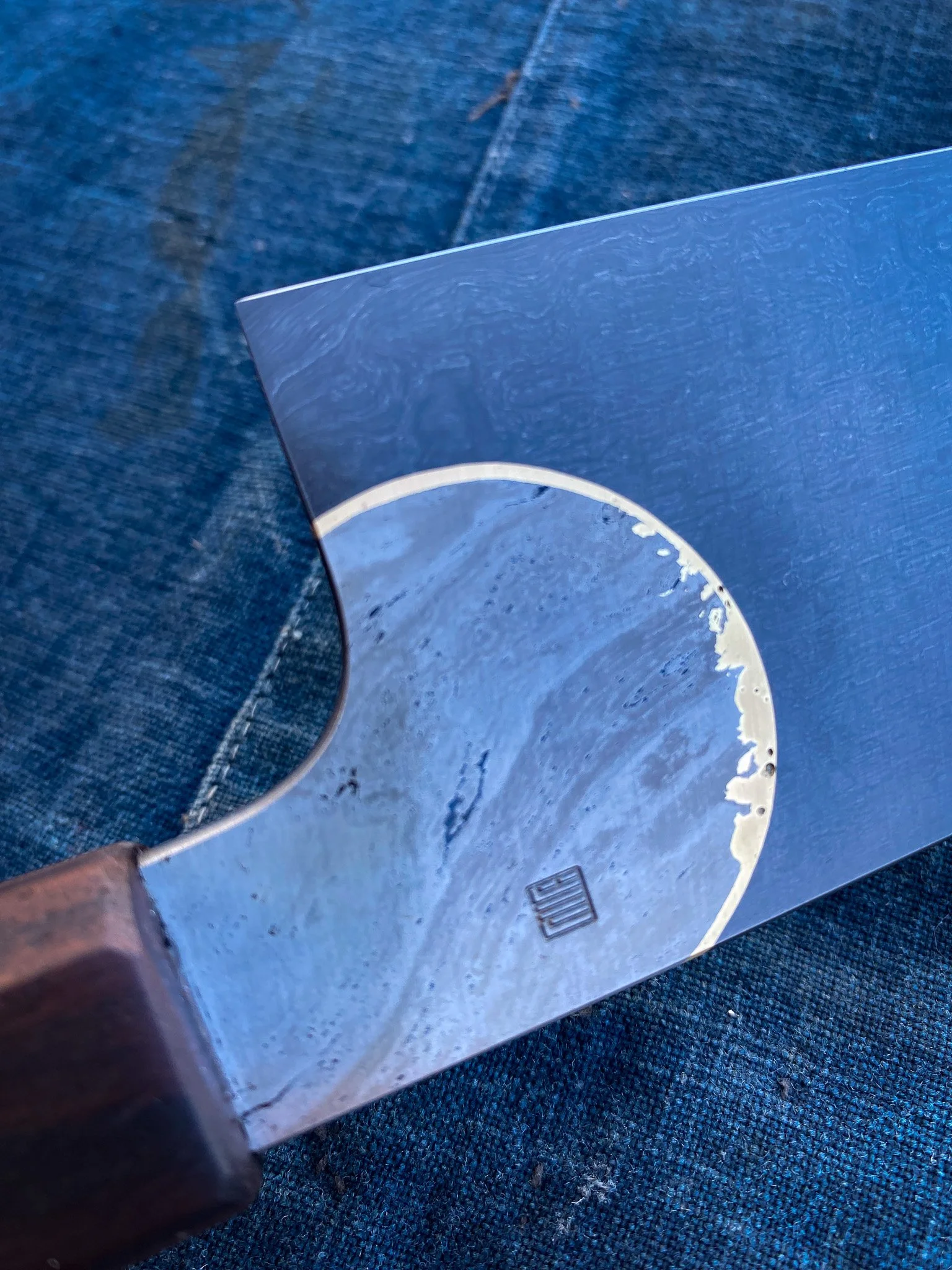
52100 Blade with a Wrought Iron Clad tang Salvaged from a Failed Knife
One can also use this technique to combine materials that are tricky to forge weld, such as high and low carbon stainless steels. The result is a fully stainless blade that has a beautiful, luminous line much more reminiscent of work done with carbon steel. When combining two pieces in this way, regardless of the type of steel, its advantageous to increase the length of the joint and vary its orientation (such as the mountain range or semicircle above). Ultimately, there are limitless possibilities with these techniques. And while I do occasionally remind myself that just because I can do something, doesn’t mean I should, for the moment I will continue to experiment widely and enjoy the spark of new ideas.
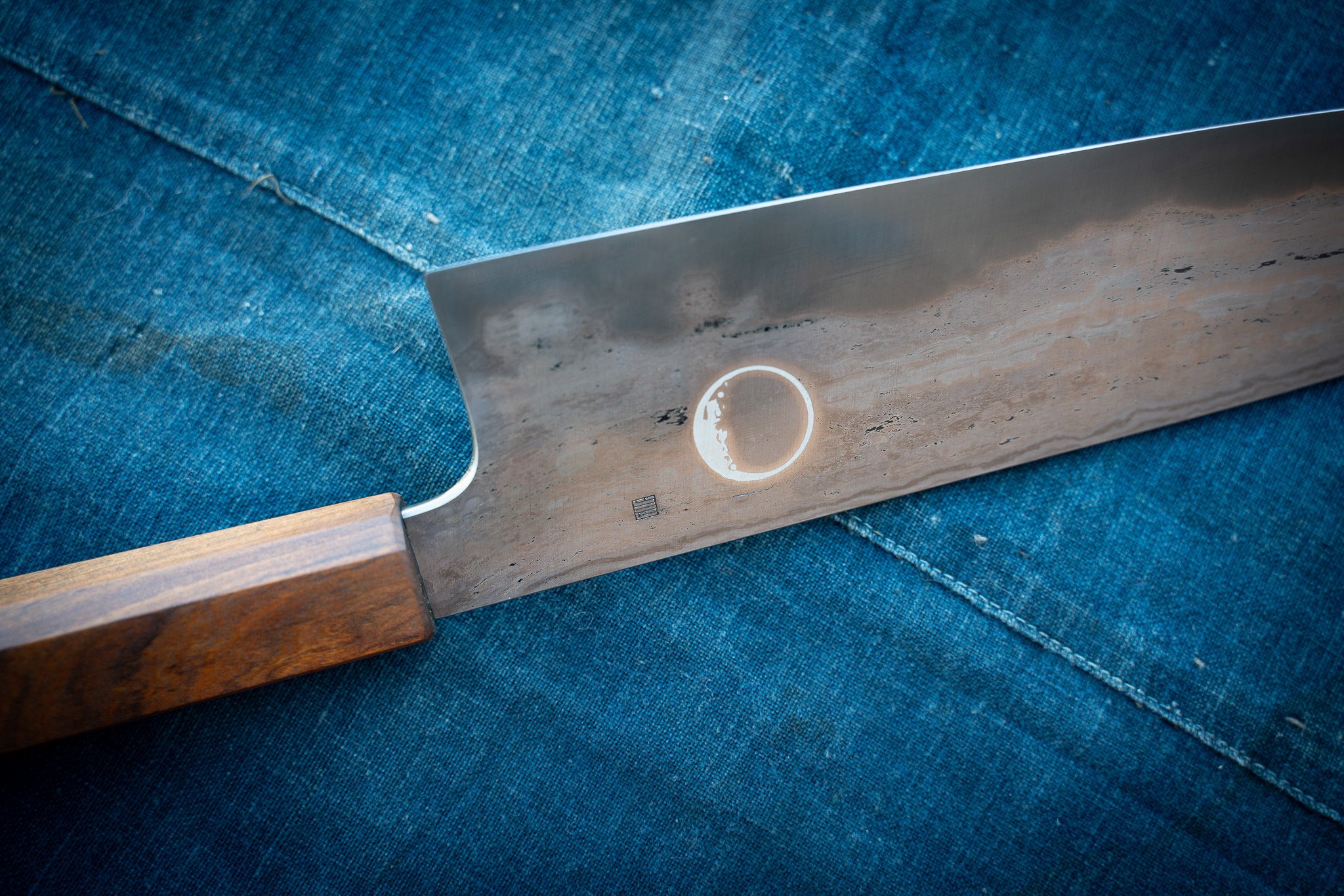
Wrought Iron clad Blade with Tin Moon “Yobitsugi”