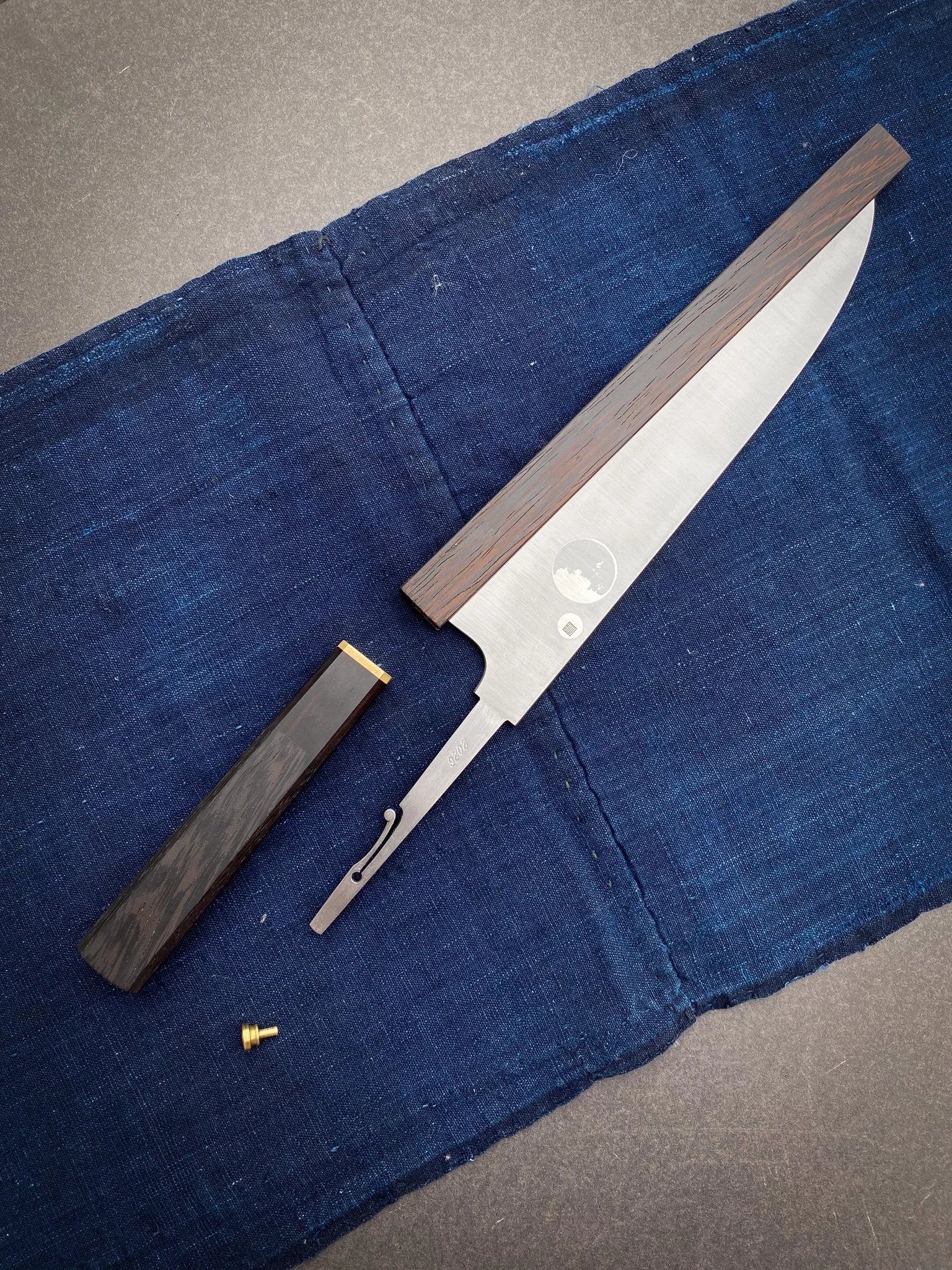
This is the latest product of my rather wild exploration of new ideas. I think it’s ultimately pretty unique and interesting but I actually started with a slightly different concept. Following my first version of a takedown handle, which was based on the pin connection used in Japanese swords, I wanted to make a takedown which not only avoids machine threaded components but actually has no small parts or tools of any kind.
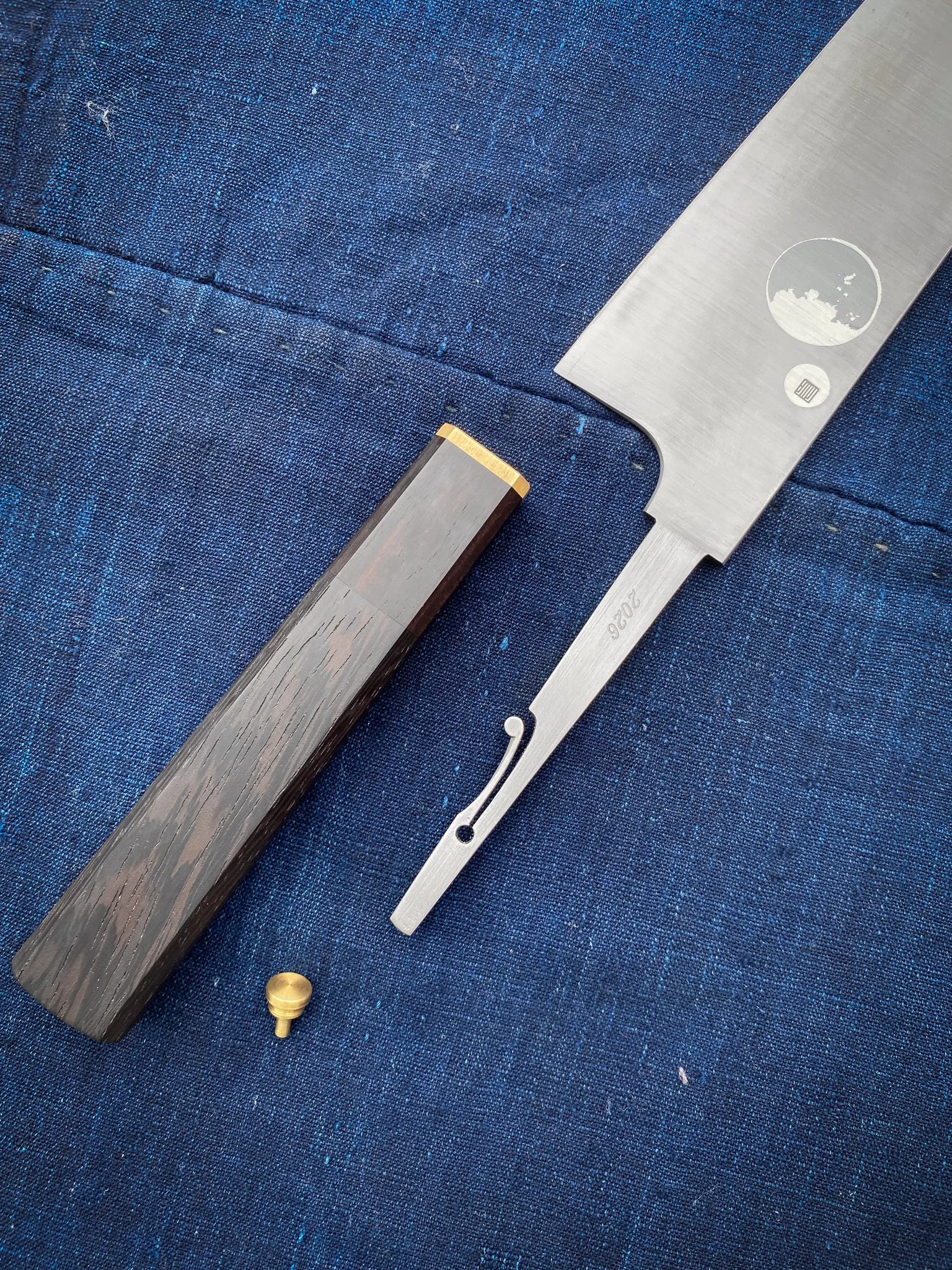
The first prototype was made with a roller catch inside the handle. The tang had a small round depression for the spring loaded ball to snap into. This was successful. The force required to remove the blade was above anything the knife would be subjected to during use but low enough that a person could simply pull the blade out with a firm tug. But the mechanism inside the handle made it bigger and heavier than I wanted. The solution was pretty obvious. Why add a tempered steel spring to the handle mechanism when the tang itself is made from tool steel? Making the spring from the tang not only reduces the weight, it creates a visual effect unlike anything else.
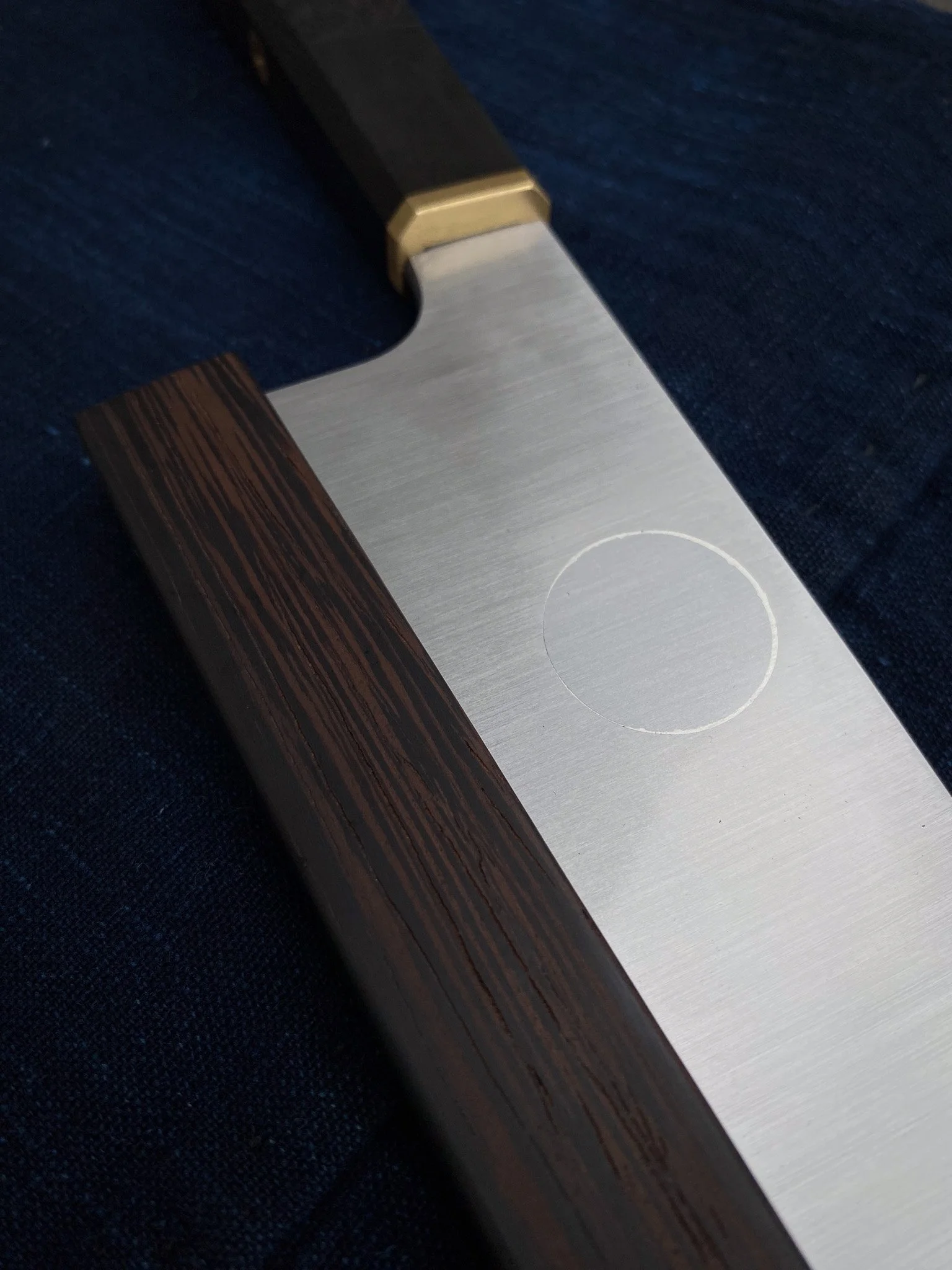
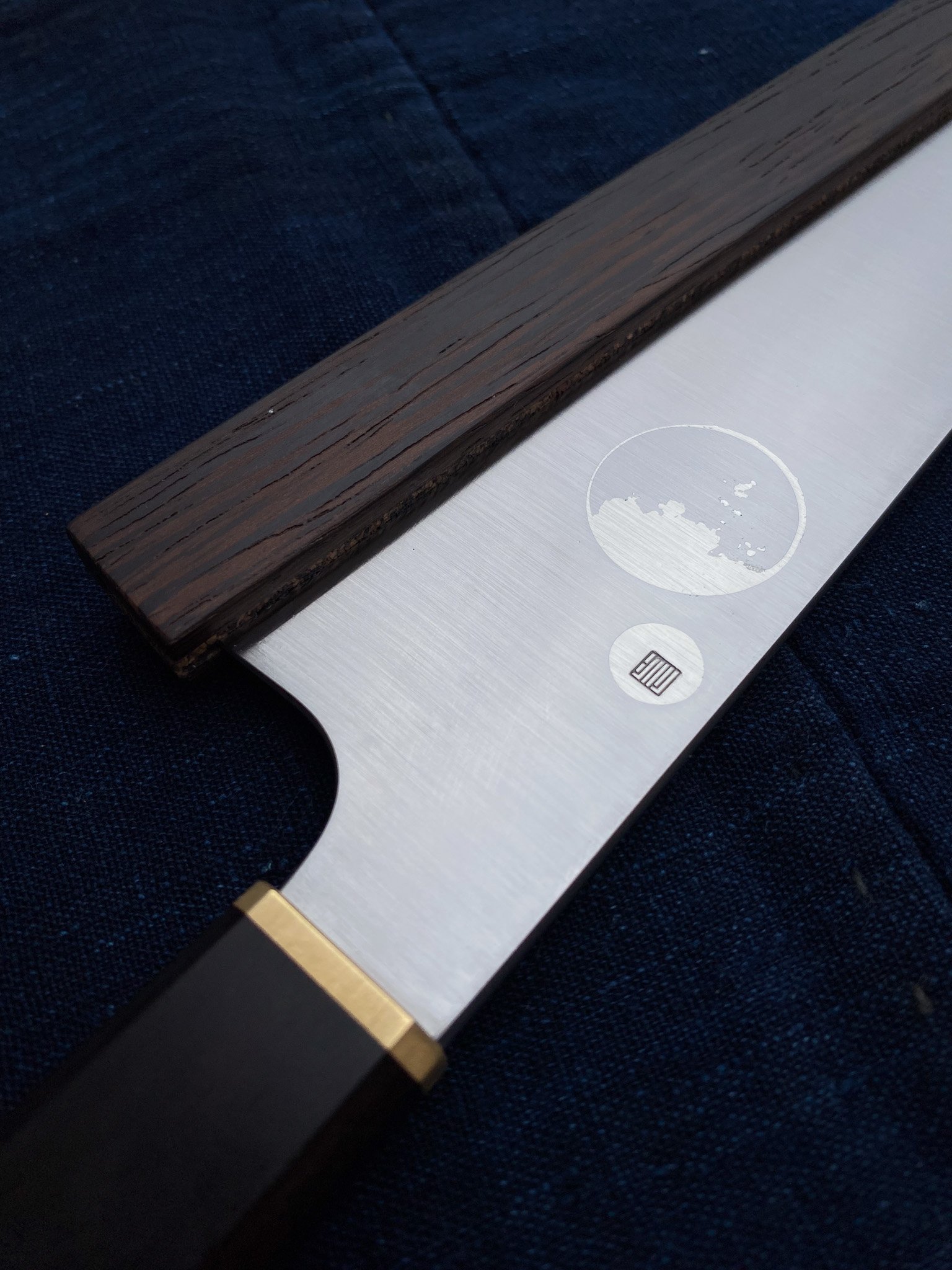
I was so excited about the idea, that I grabbed the closest knife and set about giving it a try. It happened to be a tin-silver moon 52100 blade. This was a reckless thing to do and I am somewhat lucky that it turned out at all. There was a lot to learn and I ended up redoing things many times, especially since the Tin Moon blade is an experimental element of its own.
Once I had it all together, it was looking good but the force to remove the handle was lower than the roller catch had been. Even so, the only way it would come apart accidentally was if someone swung their arm as hard as they could with the knife in hand. This seemed unlikely but I felt a pang of concern. So I ran it by a few people in the knife world. The feedback I received suggested that actually, any design that did not have a locking aspect to the connection would be problematic in their minds.
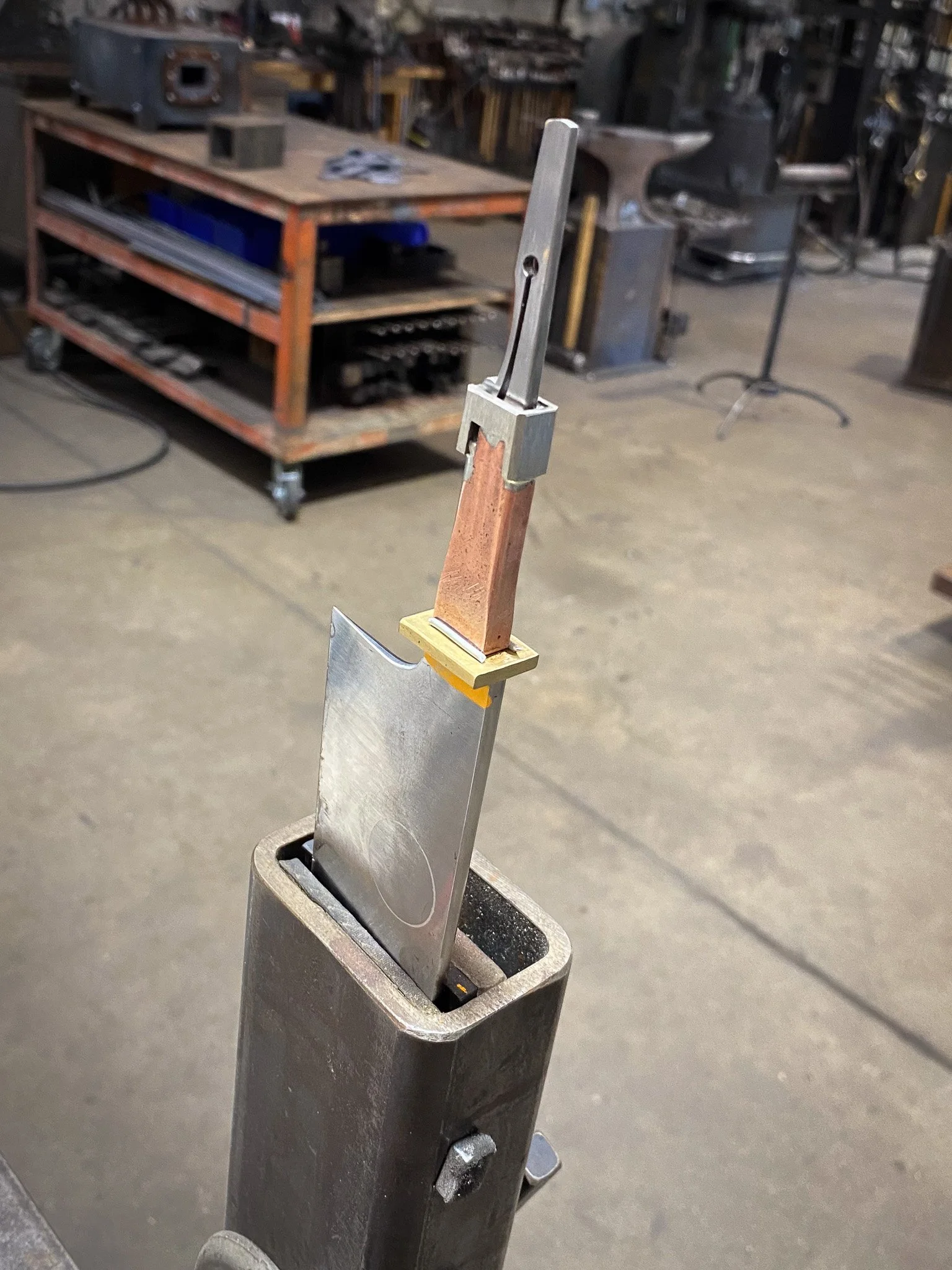
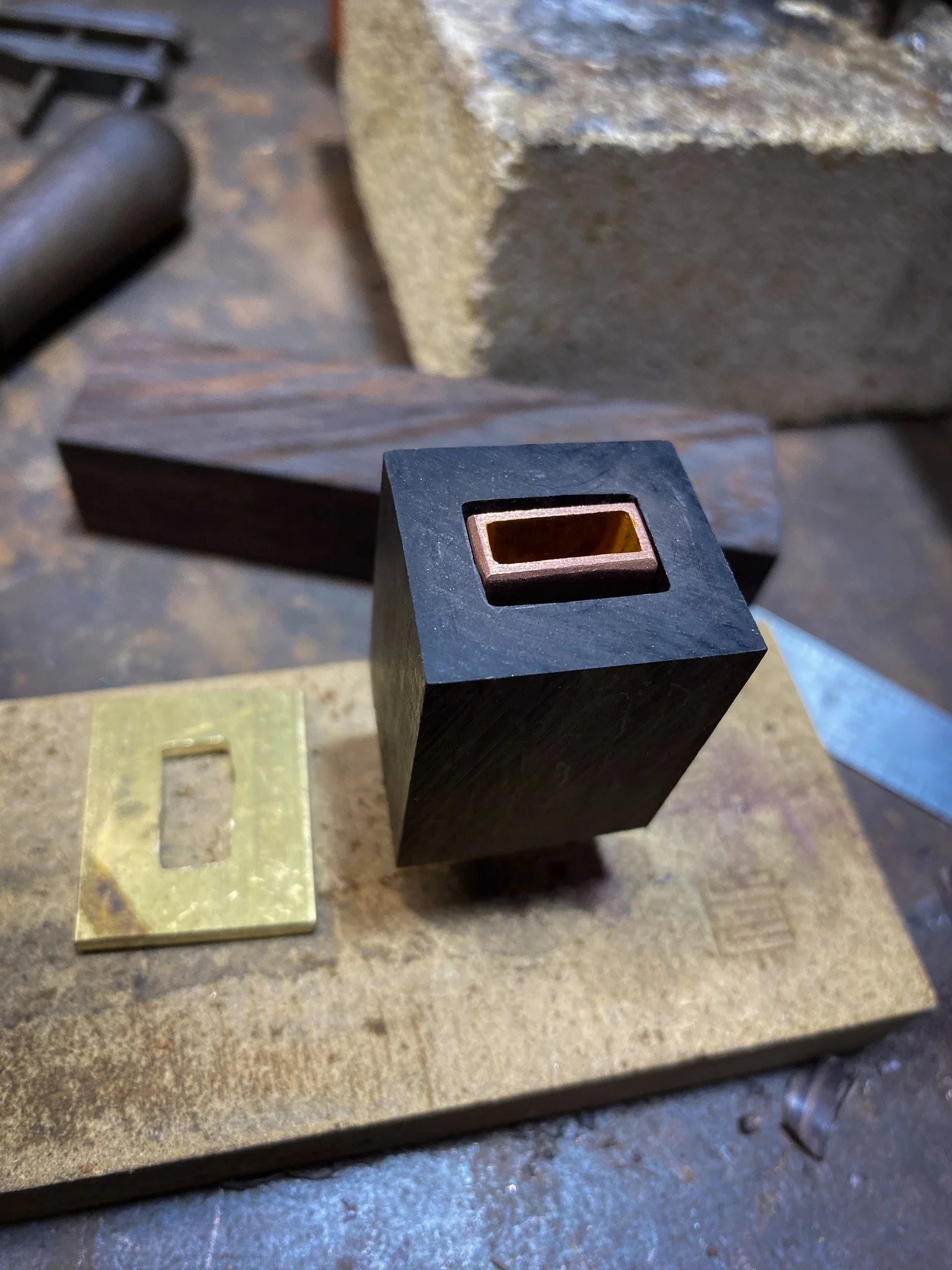
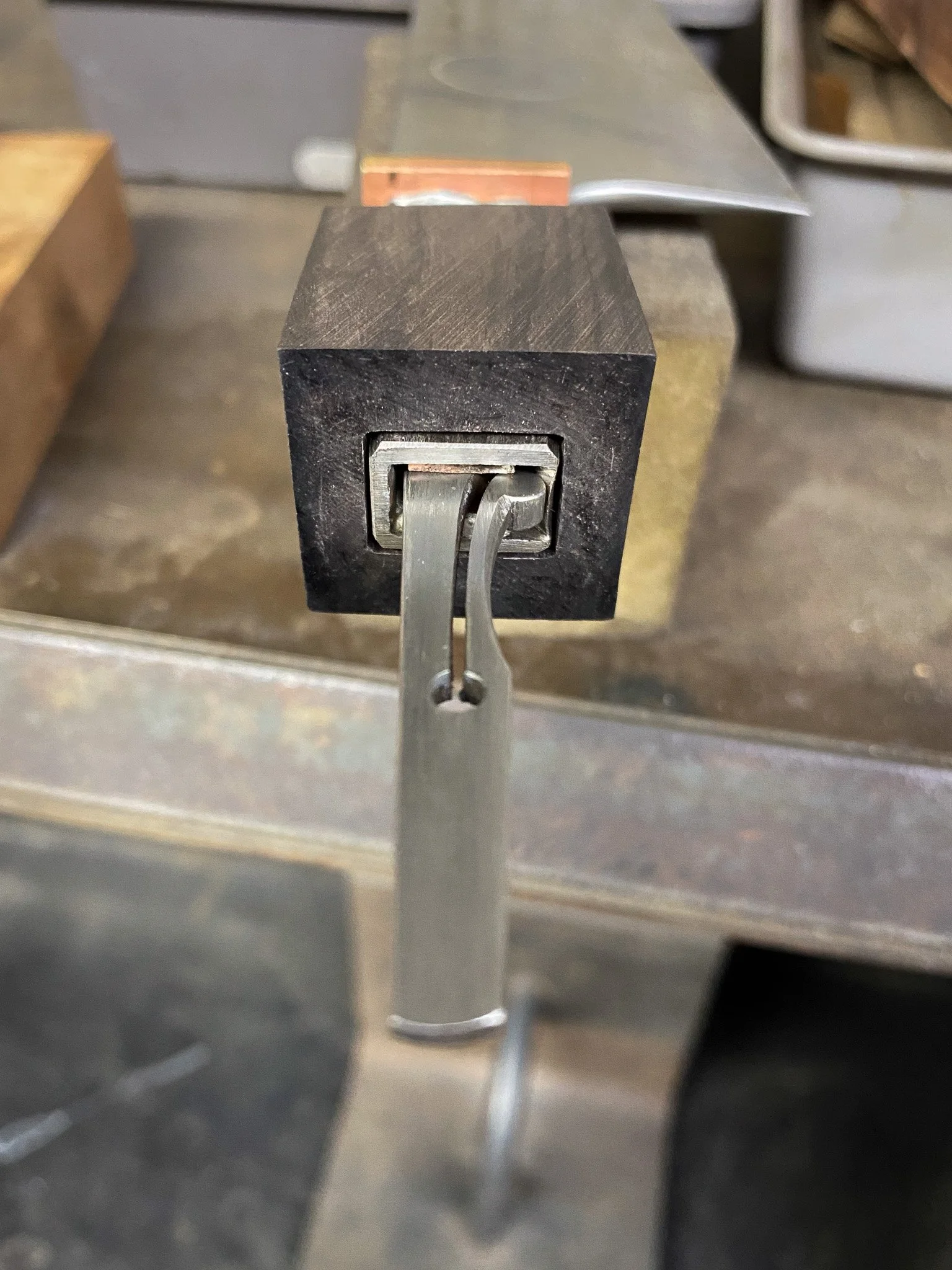
I considered this advice. To me, if the force to remove the blade is high enough that even with a hard throwing action, the blade will not detach from the handle, there is no practical risk of accident and the tool-free takedown concept is viable. But to increase the release threshold on the blade I was working on, I would need to cut the handle apart, adjust the catch and remake most of the wooden parts. If I was going that far, I could also conceivably add a push button release so the blade would be mechanically locked into the handle. While this would take me away from the original idea by adding a small part, it was kind of slick in its own way. In the end, I decided to slow down a moment and listen to the feedback, rather than push too far too quickly.
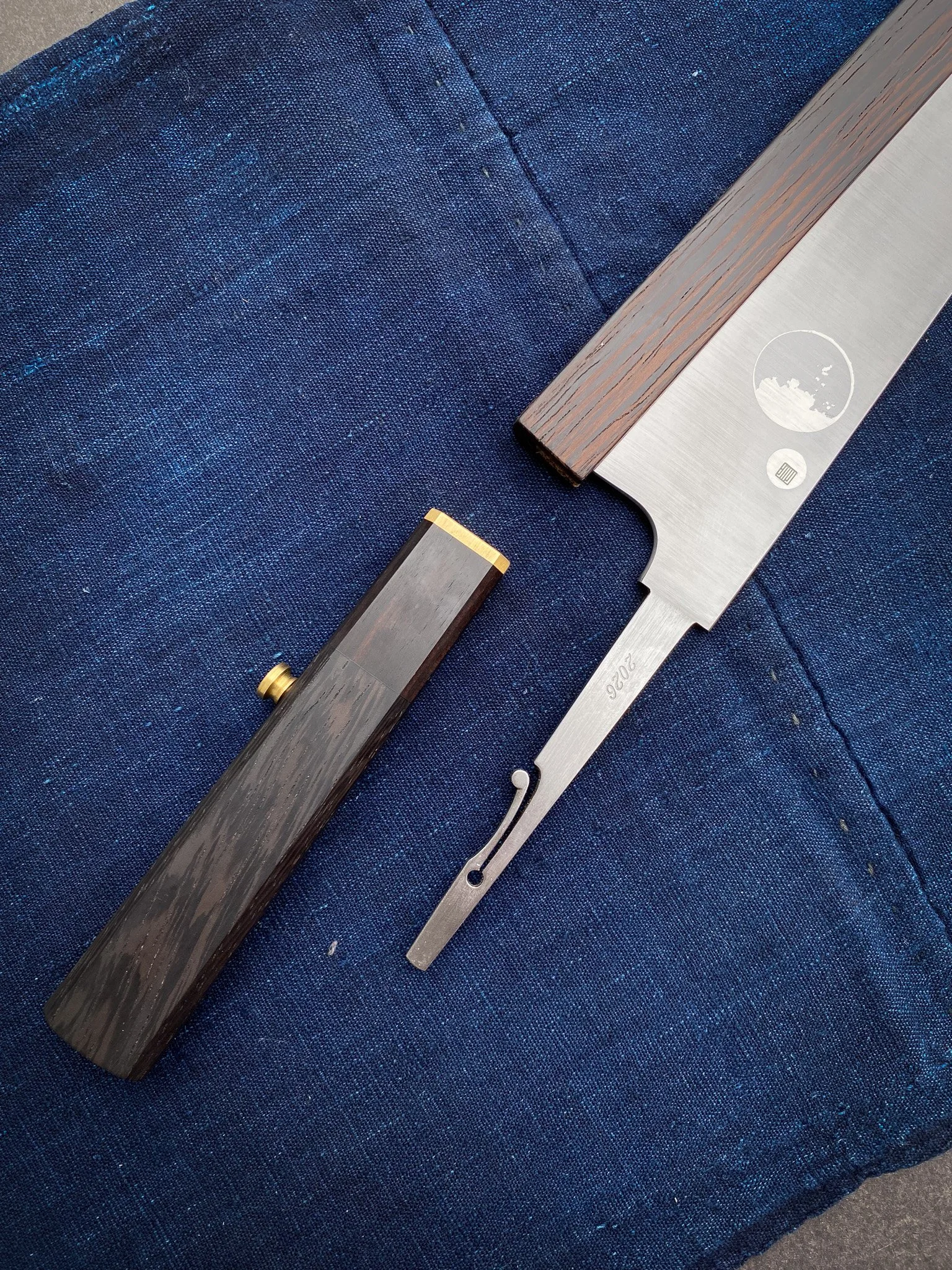
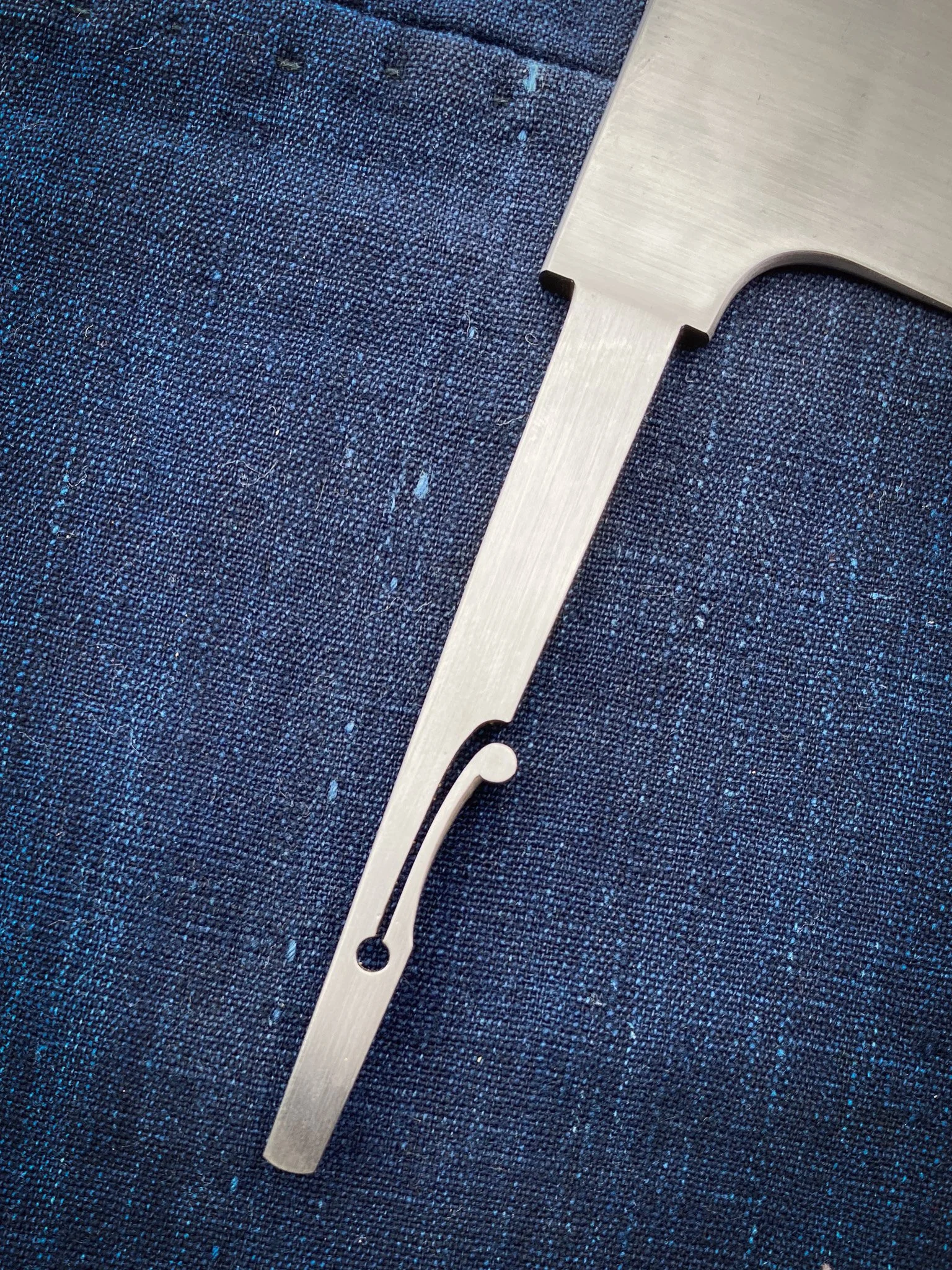
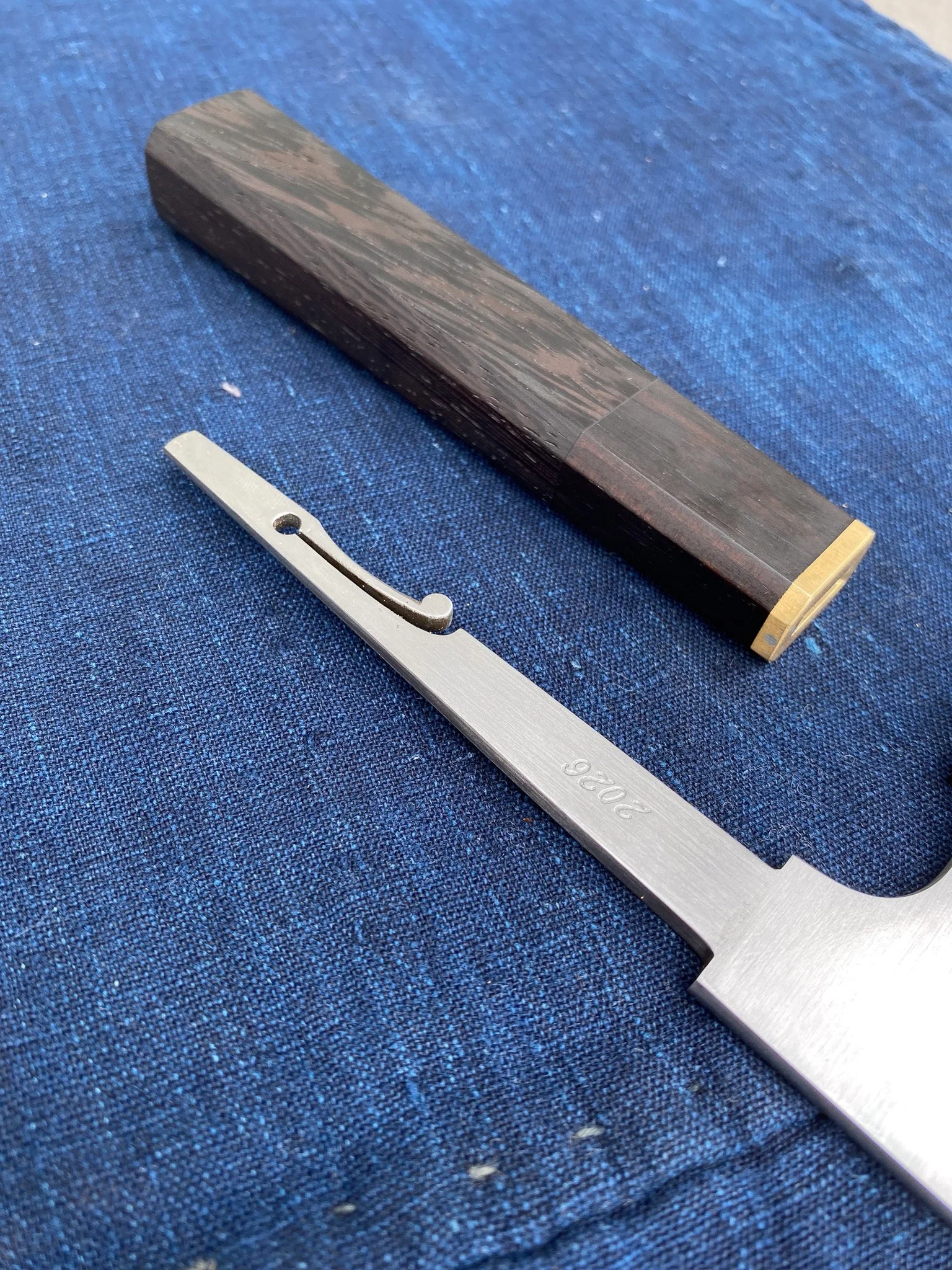
So I cut the back part of the handle off and worked out a way to add a small brass tool that would act as a removable button to depress the spring and release the blade from the handle. This also required a bit of trial and error but the final result was quite satisfying. The knife comes apart and goes together with a nice click.
In some ways, despite starting out with the intention of steering away from the machine aesthetic of threaded parts, this knife has a decidedly mechanical character. But I do think that it retains a low-tech / old school vibe that I feel good about. It is not the machine precision of CNC and mass production. It is, I hope, more akin to the handmade mechanisms of the clocks and locks of many generations ago.