
Copper decorative effects
This weekend I am releasing knives from the experiments I have been doing with copper and brass. These metals have been used decoratively in knife making for a long time and their popularity has been on the rise lately. But everyone seems to approach the use of copper and its alloys the same way they would a ferrous alloy; the metal is added to a billet as a layer. This works fine and allows the bladesmith to add a few colors to his pallet but ultimately, the visual effect is confined to the same range as other pattern welded knives. There are many striking pieces produced this way and I recognize those accomplishments, but I was curious what else might be possible.
When making a billet with ferrous and nonferrous materials the different melting/fusing/forging temperatures are an interesting problem that must be solved. A skilled smith can navigate those narrow paths and perhaps this technical tightrope is part of the appeal of this type of blade.
But the difference in melting temperature can also be taken advantage of to create effects that are completly unlike pattern welded blades. By forging the steel most of the way and fusing copper onto its surface late in the process, the copper can exist outside of “layers” and a whole new visual vocabulary becomes possible.
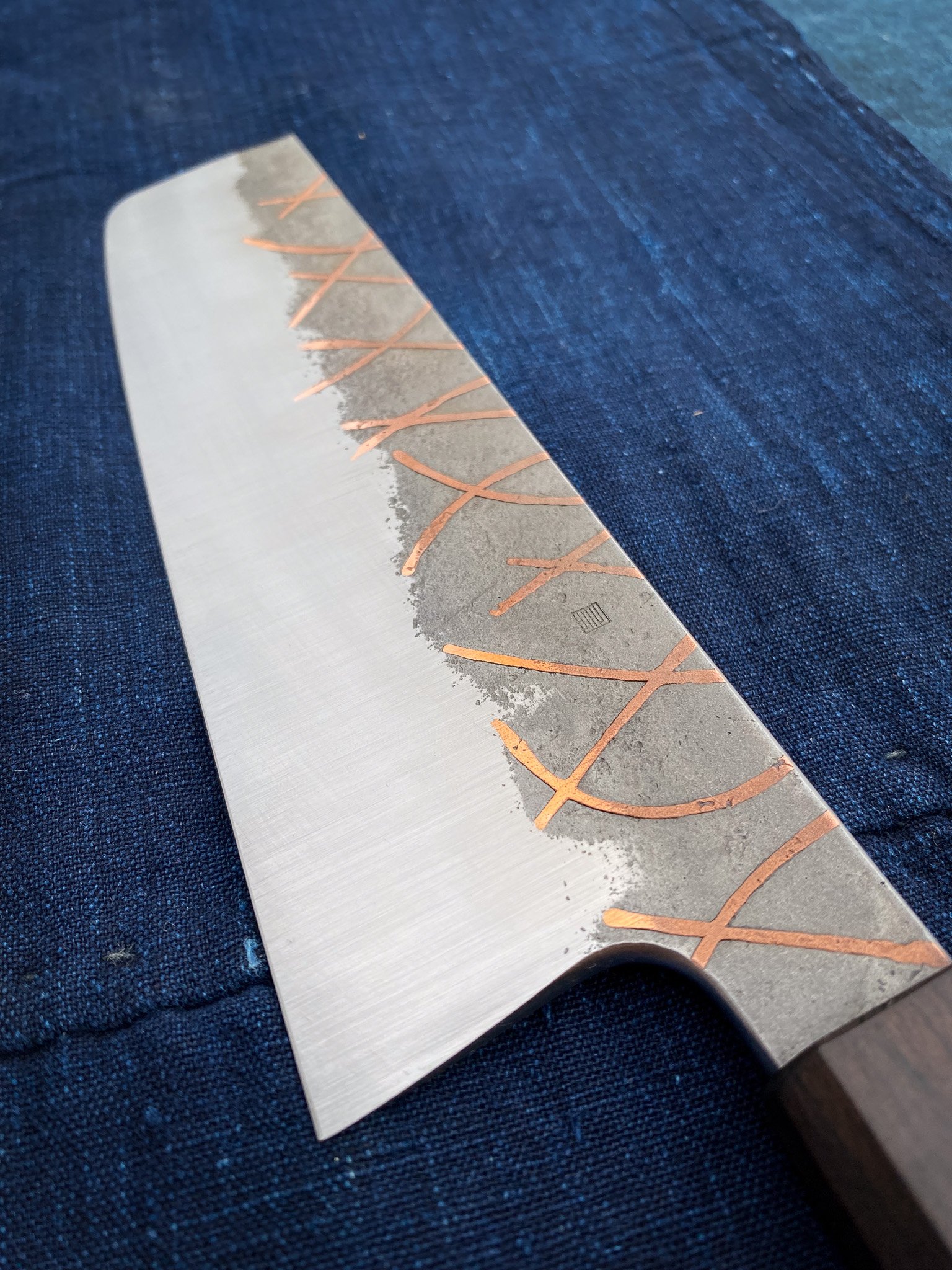
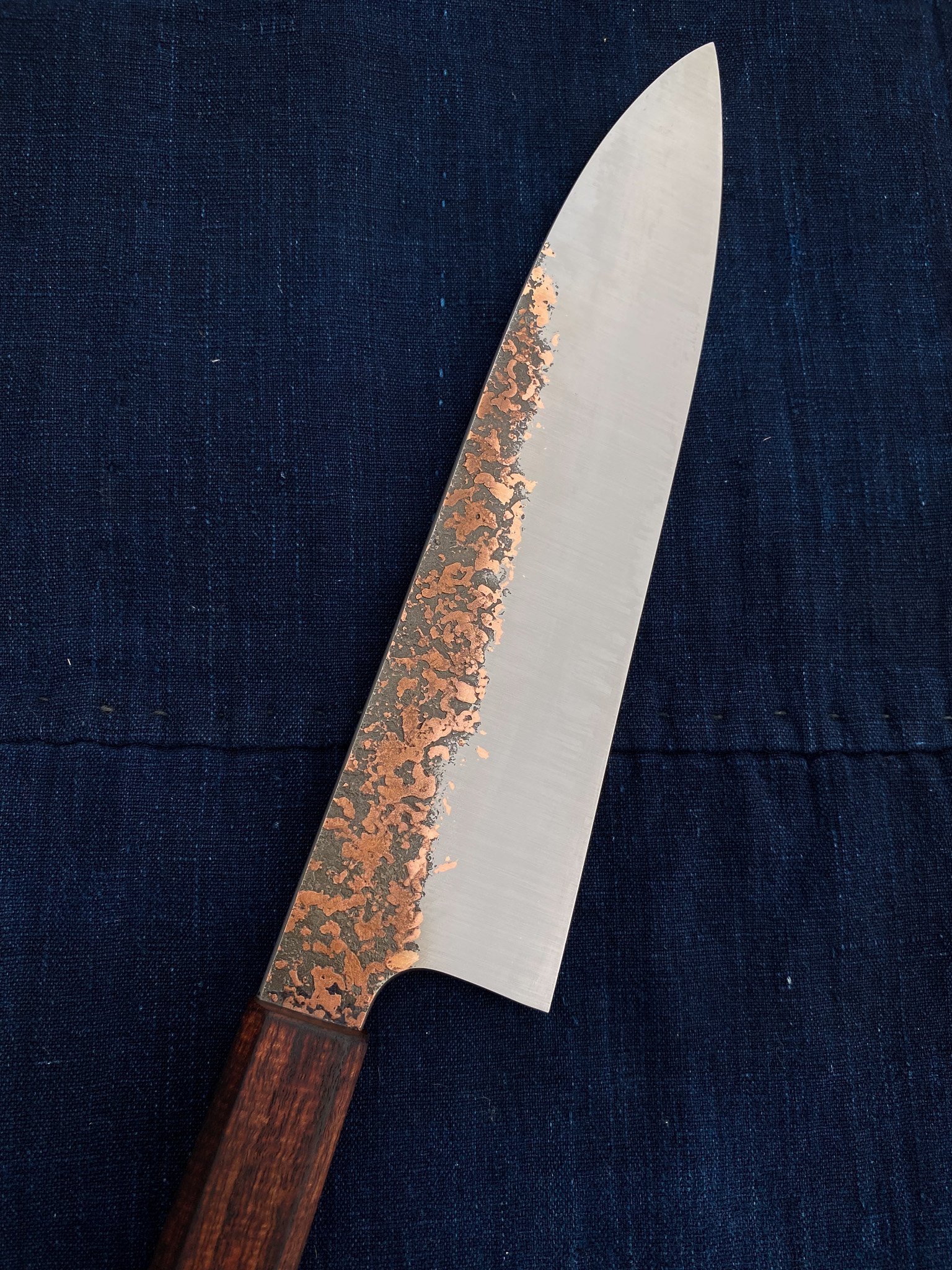
There are some technical difficulties to this method as well and in the experiments so far, I have sometimes started applying copper when the blade is still a little too thick. I have to anticipate how much forging will be needed to fuse the copper but after that, it is perilous to forge to a desired thickness as it often leads to cracking. I am still learning to gauge that correctly.
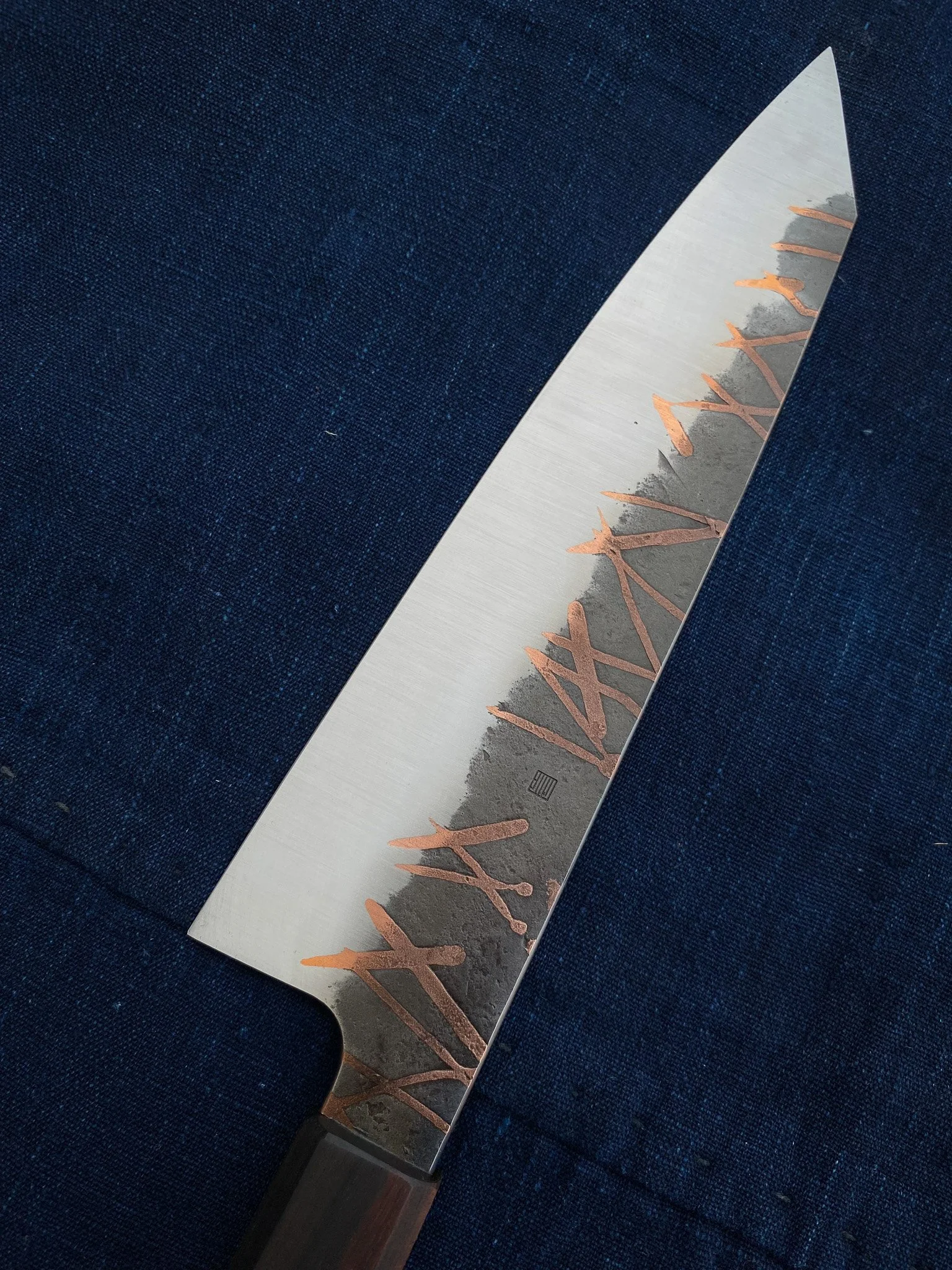
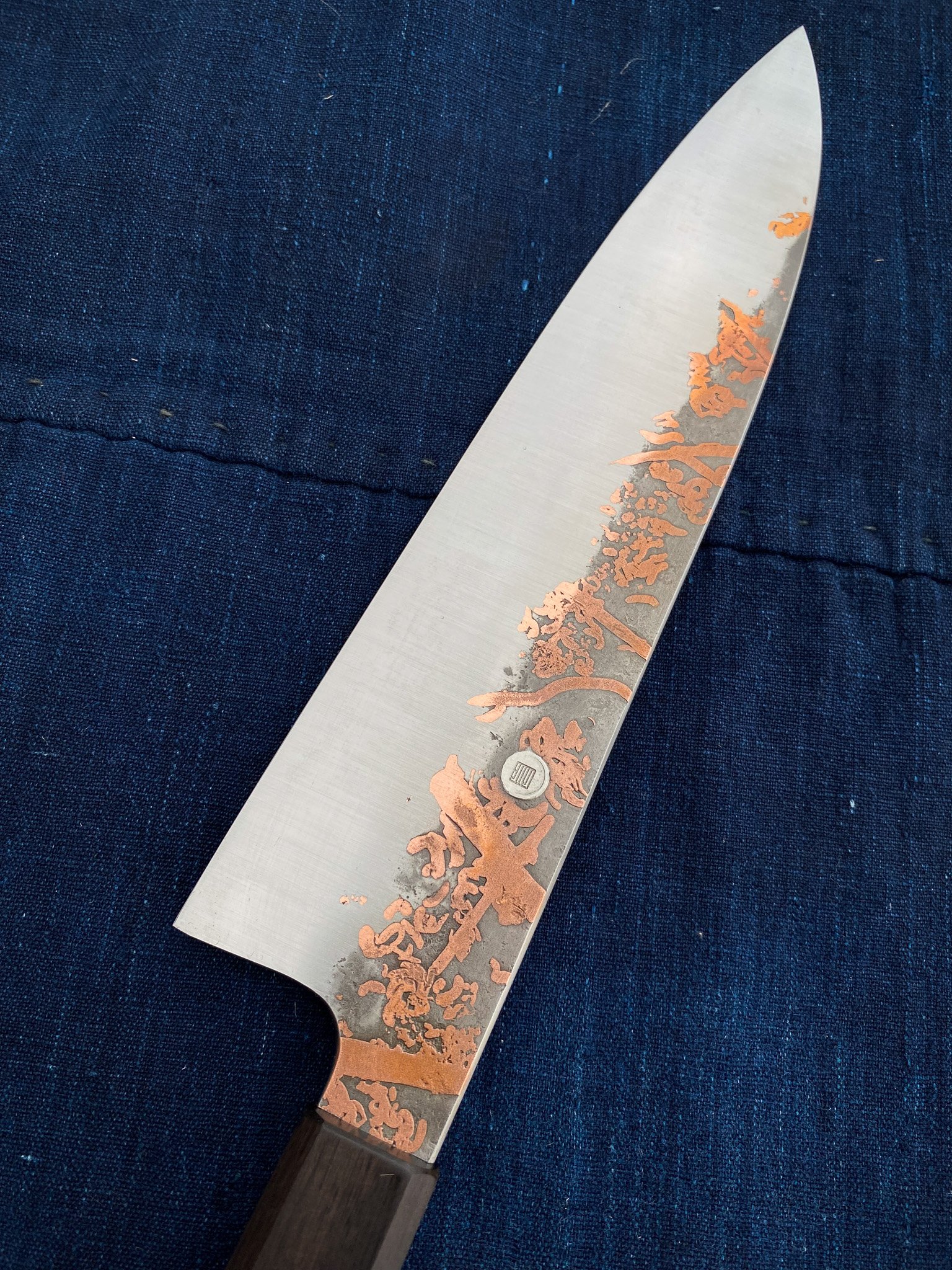
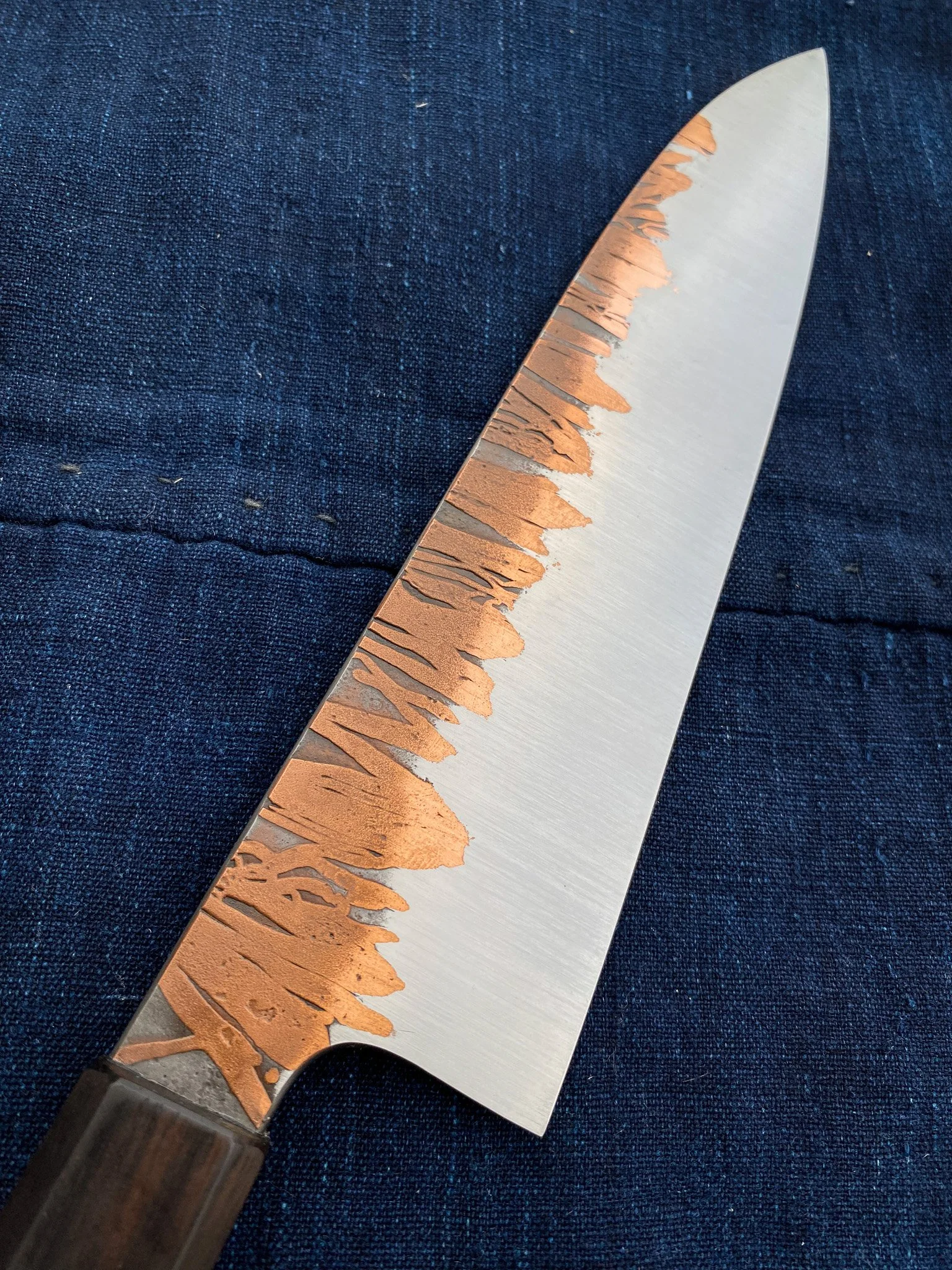
I am really excited about the aesthetic achieved with this approach. In terms of form, there are limitless variations. Some boarder on texture rather than a motif and others are structured and rhythmic. The copper can be allowed to stand out from the surface of the steel, like it is embossed, or the surface can be ground flat. But all of them have a spontaneous, organic quality that comes from the way they are made. I do not leisurely compose the pieces at a bench. They have to be (almost literally) thrown together in the mouth of the forge and allowed to shift and evolve in the early stages of the fusing process. I like to think that this unfussy approach gives the knives a delightful lack of preciousness and a quality that I love: the ability to look even better with age and wear, rather than worse.
Time will tell if that is true, but regardless, this is yet another set of techniques that I could spend a lifetime exploring. These are the first effort and they have taught me a lot. There will be more soon and I hope, as always, to refine and improve with every batch.